

spiderman
Member
- Joined
- Sep 11, 2014
- Messages
- 177
http://www.scienceal...27498546987772=
Researchers have discovered a compound in an Antarctic sea sponge that's capable of killing 98 percent of the drug-resistant superbug, methicillin-resistant Staphylococcus aureus - better known as MRSA - which is rapidly spreading throughout the US.
With more and more bacteria species becoming resistant to the antibiotics we have available, scientists are desperately looking for new ways to protect against infection, and early research suggests that the Antarctic sponge could be an option.
Staphylococcus aureus - or staph - infections are pretty common, particularly in hospital settings, and under normal circumstances they're not particularly hard to treat. But MRSA is a strain that's developed resistance to most of the antibiotics we have available, which means it can quickly spread from a superficial infection, such as a skin infection, to an invasive one, which can be life-threatening.
According to the Centres for Disease Control (CDC), around 80,000 MRSA infections are diagnosed in the US each year, and 11,000 people die from MRSA complications - and right now, we really don't have many options to fight them.
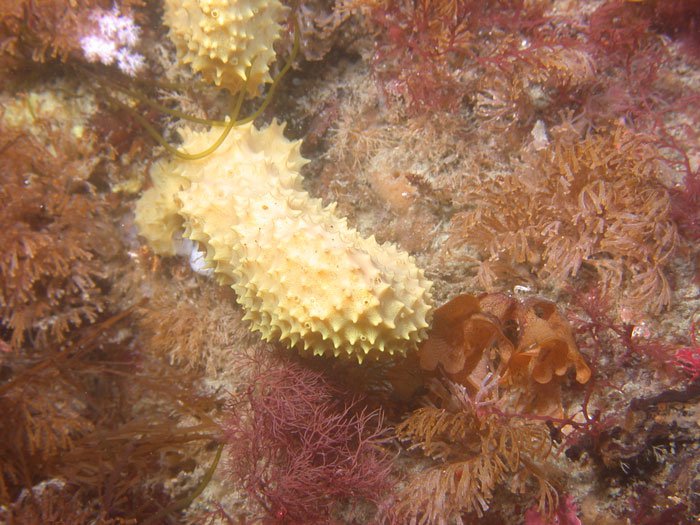
Which is why the discovery of this new compound, which has been named 'darwinolide', is so exciting. Researchers found it inside an Antarctic sponge, Dendrilla membranosa, and initial lab tests have shown that it's able to kill 98.4 percent of MRSA cells.
"It's a defensive compound against microbes with some very interesting properties," said one of the researchers, James McClintock, from the University of Alabama at Birmingham.
It's still very early days, but this isn't the first time that medically interesting compounds have been founding lurking in the ocean organisms in Antarctica - McClintock and his team have already identified a compound in algae that fights the H1N1 strain of the flu virus, and another that acts against melanoma skin cancer.
The appeal for biologists is that the region is so extreme that life has been forced to come up with some unique ways to survive - including some potent defence mechanisms, such as toxic compounds.
"Sponges aren't protected by shells and they can't move around," says McClintock - who adds that this leaves them without any physical defence against the bacteria-laden water they live in. "When you're that leaky, you have a constant battle on your hands."
The sea sponge's solution is to produce a whole range of "nasty compounds" that kill bacteria on contact, in the hopes of keeping itself free of infections.
And McClintocks' team has now been able to isolate one of those - darwinolide - and have shown that it has huge potential, in the lab at least, when it comes to fighting MRSA.
The researchers have now patented the compound, but are still in the process of understanding exactly how it works. Lab tests so far suggest that it has a unique structure that allows it to penetrate the 'biofilm' that MRSA throws up to protect itself from treatments.
"When we take antibiotics, they're chasing bacteria in fluids," says McClintock - which is why they're so often useless against MRSA.
"Darwinolide differs from previous, somewhat similar, drug candidates from sponges because its central ring structure is rearranged in an unusual way," added one of the researchers, Charles Amsler.
"If that rearrangement of the chemical backbone is in part responsible for the effectiveness against biofilm bacteria, it might be able to serve as a chemical scaffold for the development of other kinds of drugs targeting pathogens within biofilms."
The next step is to synthesise darwinolide in the lab, so they don't have to rely on extracting it from live Antarctic sponges. This will provide further insight about its structure, and will help the team work out exactly how it fights MRSA, and whether it could be turned into a treatment one day.
If the researchers are able to show that they can use darwinolide to fight MRSA in a clinical setting, it could save the lives of tens of thousands of people every years, so we're pretty keen to see what happens next.
The research has been published in Organic Letters.
Researchers have discovered a compound in an Antarctic sea sponge that's capable of killing 98 percent of the drug-resistant superbug, methicillin-resistant Staphylococcus aureus - better known as MRSA - which is rapidly spreading throughout the US.
With more and more bacteria species becoming resistant to the antibiotics we have available, scientists are desperately looking for new ways to protect against infection, and early research suggests that the Antarctic sponge could be an option.
Staphylococcus aureus - or staph - infections are pretty common, particularly in hospital settings, and under normal circumstances they're not particularly hard to treat. But MRSA is a strain that's developed resistance to most of the antibiotics we have available, which means it can quickly spread from a superficial infection, such as a skin infection, to an invasive one, which can be life-threatening.
According to the Centres for Disease Control (CDC), around 80,000 MRSA infections are diagnosed in the US each year, and 11,000 people die from MRSA complications - and right now, we really don't have many options to fight them.
Which is why the discovery of this new compound, which has been named 'darwinolide', is so exciting. Researchers found it inside an Antarctic sponge, Dendrilla membranosa, and initial lab tests have shown that it's able to kill 98.4 percent of MRSA cells.
"It's a defensive compound against microbes with some very interesting properties," said one of the researchers, James McClintock, from the University of Alabama at Birmingham.
It's still very early days, but this isn't the first time that medically interesting compounds have been founding lurking in the ocean organisms in Antarctica - McClintock and his team have already identified a compound in algae that fights the H1N1 strain of the flu virus, and another that acts against melanoma skin cancer.
The appeal for biologists is that the region is so extreme that life has been forced to come up with some unique ways to survive - including some potent defence mechanisms, such as toxic compounds.
"Sponges aren't protected by shells and they can't move around," says McClintock - who adds that this leaves them without any physical defence against the bacteria-laden water they live in. "When you're that leaky, you have a constant battle on your hands."
The sea sponge's solution is to produce a whole range of "nasty compounds" that kill bacteria on contact, in the hopes of keeping itself free of infections.
And McClintocks' team has now been able to isolate one of those - darwinolide - and have shown that it has huge potential, in the lab at least, when it comes to fighting MRSA.
The researchers have now patented the compound, but are still in the process of understanding exactly how it works. Lab tests so far suggest that it has a unique structure that allows it to penetrate the 'biofilm' that MRSA throws up to protect itself from treatments.
"When we take antibiotics, they're chasing bacteria in fluids," says McClintock - which is why they're so often useless against MRSA.
"Darwinolide differs from previous, somewhat similar, drug candidates from sponges because its central ring structure is rearranged in an unusual way," added one of the researchers, Charles Amsler.
"If that rearrangement of the chemical backbone is in part responsible for the effectiveness against biofilm bacteria, it might be able to serve as a chemical scaffold for the development of other kinds of drugs targeting pathogens within biofilms."
The next step is to synthesise darwinolide in the lab, so they don't have to rely on extracting it from live Antarctic sponges. This will provide further insight about its structure, and will help the team work out exactly how it fights MRSA, and whether it could be turned into a treatment one day.
If the researchers are able to show that they can use darwinolide to fight MRSA in a clinical setting, it could save the lives of tens of thousands of people every years, so we're pretty keen to see what happens next.
The research has been published in Organic Letters.


 goated work
 🥱
🥱